

Praying for Healing
this is the first time I'm writing in the middle

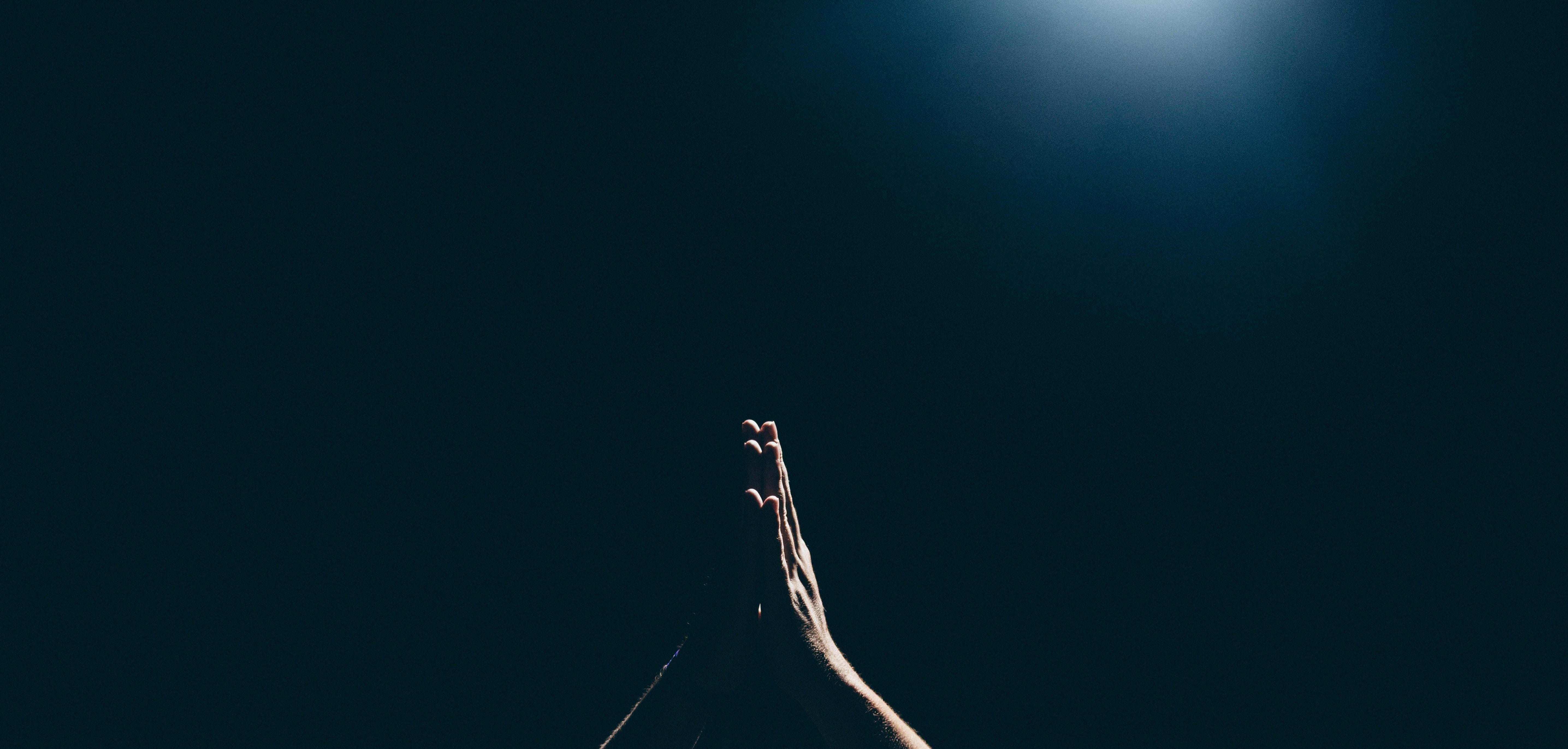
I know what it is to write on the other side of things.
I’ve mastered the art (okay, at least worked on the art) of looking back. I’ve published essays reflecting on the experience of adjusting to living with chronic pain, the lessons after I’ve embraced the new normal. And that’s all well and good. Like my high school math teacher told me, sometimes you just can’t know something until you move to the next chapter and then review.
But today I want to try something new. I want to write from the middle, the messy in-process. It’s a scary place for me. It’s imperfect. I might be proven wrong. I might say something I later have to amend, or—horror of horrors—completely retract. For an enneagram One, it’s just about the worst thing I can think of.
But I have to. Because the middle is the present, and the present is where God is, and for too long I’ve been avoiding his presence in this area of my life.
Today, I want to write about praying for healing.
The short version of the story is that I’ve lived with chronic pain for ten years now this fall.
The one-sentence summary is this: In my last year of high school, a sports injury mysteriously flared up and spread and wouldn’t go away like some invasive plant taking over the upper half of my body. September will mark a decade of this shadow companion. When it first happened, I was thrown into existential angst about whether God was punishing me, whether it was my fault, whether God was indifferent or cruel or a joke. The pain caused me to put my life on hold for two years and embark on the medical establishment tour-de-force only to end up with no diagnosis and a lifetime supply of K-tape.
Eventually, I exited crisis mode; I adapted, figured out pain management, got creative with modifying tasks so that I could function. Since then, I’ve graduated from college, worked full-time, and am now pursuing a master’s degree, all mind-boggling gifts that I thought were taken from me in those first, dark years.
But I’m still in pain. There are still activities I say no to and a thousand tiny concerns, calculations, and concessions to my stubbornly un-healed body that fill up my days. The limitations feel most pressing when I imagine my future, when I watch the moms around me swinging kids onto their hips and rocking babies to sleep and pushing giant strollers. I hold a baby at church for ten minutes, and my arms ache. How on earth will I take care of children? And if children aren’t in my future, how will I be able to function as my body inevitably declines due to age? Will the few activities I regained be taken from me again, and how soon? And am I content to accept that I’ll never be able to work toward building muscle, swim for long, or carry groceries again?
I was talking to a friend about it last weekend, and I said something I didn’t expect to. Something I’ve never really said aloud to anyone, or even myself, at least not this baldly:
“I don’t pray for healing anymore.”
“I pray for help managing pain day to day,” I clarified, “and that it won’t get worse when I have a flare up. But I don’t really pray that I’ll be fully healed.”
And when I said it, I wanted to cry.
At the beginning, I did pray to be healed.
I prayed desperate, snotty, screaming prayers. I begged God to return me back to the way things were. That was my only framework for what this could look like, actually—the only possibility I could imagine was full healing. Of course that’s what I would ask for. And I did, day after day.
Then the days became months became years, and eventually I realized that maybe … maybe God wouldn’t heal me. At least not completely, not back to the way I’d been before the injury. And I realized that maybe the two options were not crippling pain that kept me homebound or full recovery of my able-bodiedness but rather a thousand shades of gray in between. A partial healing. A managing. An adapting. A new normal.
I still remember when the switch flipped. I kept thinking that I would only be able to go to college once I was better, once I no longer had pain. Then I was talking with some family friends, and they asked if I had looked into disability accommodations. “You could probably still go, as long as you can find some solutions that make it possible for you with your new limitations,” they said. I hadn't realized until that point how sheltered and blessed my family and I had been, that we hadn't even considered such a thing. None of us had needed something like that before.
But that suggestion refrained everything for me. I didn't need to put off my whole life until I was healed. I could find a way to live un-healed.
That moment was a profound work of grace in my life. The narrative flipped from what I didn’t have, from comparing to what I had been, to what I did have, to what was still possible. I needed that new story. It set me free from assuming there was only one answer to my prayer, only one way I could be happy, only one kind of flourishing life.
I remember, too, a moment when I realized I had been healed. I still have the draft of a poem on my Notes app, typed out on the New York subway as I lived my full, beautiful, chronic-pain life:
I tell people it is a plateau
A slight upward dip where I can stagger to my feet
Just so many meters wide that I can find my footing
And stay here in a perilous sway
I guess without realizing it
I’ve learned how to dance
Not across salt flats, white and far-flung and glittering,
And not on water, all magic and faith and deep calling to deep,
But on this square of stone with space
For one pirouette
On the good days
But before, before—
I couldn’t spine my ankles at all,
Couldn’t unbend or uncrumple,
Couldn’t face the stars because the dirt kept clawing my head back down
Now my ankles shake but they hold me
I have learned to trust them again
This plateau, I tell people,
It is too short to taste the sunrise first
Usually it gets the gleanings of the higher rises
But it does get golden hour,
A gossamer glory that I’ve learned to arabesque before
I say all this, lay it out before you,
And I see it as for the first time, I see how,
I guess without realizing it,
He has healed me
He healed me enough
I had prayed for healing for so many years, assuming that it meant one thing: a return to the pre-broken Aberdeen. The body that I remember from high school. But maybe I had missed the healing that had happened, the easing of sharpest edge of pain that make it possible to still think, to dream, to add to my spoon collection (iykyk).
I needed that moment too, the gratitude of all that had been given back to me. One of the most precious gifts of chronic pain, for me, has been the way it has forced me to see that daily activities or “normal” life milestones are things of infinite, precious value. It colors my life with wonder, because I now know what it is to not be able to take those things for granted.
Maybe, I thought, being healed enough is all I needed. Maybe that is the answer.
And so, I stopped praying for healing.
I did so mostly because my prayers changed—as I stepped into the life of embracing my limitations, of accepting the answer (so far) of “no” to full healing, of discovering the gifts of my new normal, my needs and desires shifted.
I think, at first, at least, that’s why. And I think that was a grace and a mercy and an invitation of God into a life I couldn’t have imagined for myself.
But over the past few years, I’ve felt a shift in my spirit, a thread of unease. When I tell my story to people for the first time, sometimes they ask if I still pray to be healed or they tell me they are praying for me. And I smile and thank them and say yes, I do still hope to be healed, who knows what God will do, and I don't interrogate any further why I don’t actually pray about that hope in the quiet of my heart when I’m alone.
There was a conference in New York a few years ago that several college friends of mine were going to, a night of prayer and worship—and healing. I heard that some people there would pray for specific requests, including for physical healing, and I said, absolutely not, no way I’m going to that.
I have the same reaction when my friend last weekend gently suggested that I think about asking people to fast and pray for my healing or looking into a deliverance ministry. Every door inside me slammed shut, every wall shot to the sky. Absolutely not.
I have plenty of theological and sociological reasons for this: I was brought up in very Reformed churches, heavy on the thinking and light on the feeling—or rather, deeply suspicious of the feeling. There is not a strain of Pentecostalism in my family or any church I attended while growing up. We were deeply thoughtful, intellectual cessationists who knew that the heart is deceptive above all things and that people can manipulate your emotions and prey upon your fears and desires, all in the name of Jesus, and we would not be duped by that, no sir.
I say all this with a little snark, but really, I am grateful for so much in the traditions I was brought up in, and they are right on about the dangers of charismatic extremes.
But there are dangers on the other side too, dangers of snuffing the Spirit and masking the need for control with a deluge of doctrine, and I have long felt that the fear that rises in me at any thought of the Spirit working in ways I can’t analyze, control, or predict is not a good fear. It is an area of weakness in me. Or, better, an area of invitation where God wants to show me more of Himself. But I have steadfastly resisted that call.
Until now.
Remember, this is an in-the-middle essay. I still feel sweaty and anxious at the idea of asking people to fast and pray for me. “God will have to do a lot in me before I go to a deliverance ministry thing,” I told my friend last Saturday, and I still feel that way. It’s all so foreign to me, and I have so much I need to work through, with God, before I can move forward with anything like that.
Hence this essay; here is me working through some of the stuff.
Because here is the thing: While initially my prayers changed because of a much-needed perspective shift, something else happened too. I stopped wanting to keep praying for healing. Because praying for anything for any period of time without any visible change—especially when it’s something you desperately want, more than you can bear to admit to yourself—is freaking exhausting.
And it’s terrifying. I know now that God will not spare me. That’s when you really become an adult in your faith, the first time something happens and you realize God does not protect his children in the way that you want him to. Christian philosopher Nicholas Wolterstorff wrote in his biography about his son’s death:
Faith involves cognition of some sort, be it belief or something else; but faith, at its core, is not belief but trust. After Eric’s death, my trust in God became more wary, more cautious, more guarded, more qualified. I pray that God will protect the members of my family. But I had prayed that for Eric. I still trust God; but I no longer trust God to protect me and my family from harm and grief.
It guts me: But I had prayed that for Eric.
It’s like the Andy Squyres song, too, the line that makes me cry every time: “I moaned a bitter moaning, I sang the sweetest song / With my disappointed people, to our disappointing God.”
Our God is so disappointing, isn’t he?
There were a couple times I was really sure God would heal me.
At first, it was the blind, naïve refusal to accept reality, the youthful rigidity of belief that since I could not imagine a life where I didn't get better, that life was not possible. Of course God would heal me. Things like this didn't happen to me.
But then there were times when I had wrestled through things in my faith and my next-step decisions, and it seemed like the only obstacle left was my health, and I was so sure that God would resolve that too. It was the final missing puzzle piece, and it only made sense that he would put that back as the finale of that season.
Then he didn’t. Then I learned that there was beauty in the “no” he was handing out in response to my prayers.
And maybe it was too painful to keep hoping that the “no” was really a “not yet, keep asking,” so I stopped.
And now … now it’s all complicated. Ten years in, I’ve wrestled through so much pain, rewired so much theology, built up so many new narratives and coping mechanisms, scrawled so many thank-you lists, cried so many tears, it’s like I don’t I know how to surface from the sea of this experience.
I told my friend, “I know that only prayers asked in faith are answered, and I know I don't have faith that he will heal me, so what's the point of even praying?”
And please—I know all the theological problems with that statement. Or at least, I know a lot of of them. I don't really need to hear the theological answers. That statement contains a world of pain, and, near-heresies included, sums up the resistance that rises in me when I think seriously about asking for healing.
Journaling later, I realized also that maybe it’s not that I don’t have enough faith that he will heal me.
Maybe it’s that I don’t really want to be healed anymore.
Because, at this point, healing would feel like an indictment.
If I found the right doctor, it wouldn't be so bad, but it would still feel like I hadn’t been creative enough or proactive enough or persistent enough in looking for doctors or solutions.
It would be worse if I got healed “miraculously” (although any healing is miraculous). It would prove that I could've been healed all along, and I just didn't have enough faith or wasn't open enough to God, that I’d been harboring some sin or lie that kept me from freedom.
At this point, healing feels like condemnation of the past ten years. I’m afraid that it would delegitimize everything I’ve worked for, all the gratitude and the perspective-shifting and the embracing of limitations. All the gifts I’ve found in pain—if I get healed, were they fake? Was I wrong to hold onto them?
My core fear, at the end of the day, is that this is my fault. And I’m terrified that a cure will expose that the poison all along was me.
I’d rather be the noble martyr, suffering a mysterious curse, made saintly by suffering. Suffering sucks, but I kind of like that narrative. I don’t want to discover that I’ve been sabotaging myself.
And, of course, maybe I won’t discover that. That’s my fear talking. I know. But fear is so loud. It’s a siren song that has constructed an impressive fortress around this part of my life, and I have kept God safely out. He can help me manage pain. But I stopped inviting him in to eradicate it.
You are probably waiting for me to say the most obvious thing:
The reason I don't want to pray for healing is that I don't want to be disappointed.
And you’re right.
I wrote this thing about Lazarus once, another little Notes-app snippet:
Your fatal mistake was Lazarus
You shouldn’t have done it
Now we will always demand it of you
Despite the fact that it is an exception
It is now our breathless expectation
Really, though, why would he do that? Not, why would he heal people? But why would he heal some people? Why would he raise one person, out of the billions he lets stay dead? Why do that to us?
I know I'm wading into deep theological territory here, with questions people have asked for literally thousands of years about why God heals some people and not others. I should do more serious research into the theological discussions around these questions. But there's one article on the topic that I read a few years ago, and I think about it almost weekly. It makes me cry every time I read it. It's called “On the Possibility of a Miracle,” in which church historian Caleb Maskell answers the question: “Have you ever witnessed a miraculous healing?” I wish I could quote the whole thing. But here are the parts that are relevant:
I have a ton of sympathy for folks who are instinctively disenchanted, because most of them have never been in an environment where healing prayer is practiced. In this way, disenchantment becomes a self-fulfilling prophecy, right? As I said earlier, I am a really bad healer. I have only ever seen a handful of people healed, even of small things—a fraction of the people that I have prayed for. But that fraction is a higher number than zero, which, I must admit, is quite inspiring.
…
I don’t know how to heal anyone through prayer. All I know is that Jesus instructs his disciples to pray for the healing of all who desire it, and that the results are always mixed. Sometimes people are healed, and sometimes they are not. It seems to me that God chooses who is healed. Thus, healing prayer is less a technique than a petition. This doesn’t make things less difficult or less painful. It just makes them differently painful.
I have lived with a lot of types of pain, physical and spiritual, but I don’t know that I have the courage for that type of pain: the type that looks God and his works full in their mysterious face and says, okay. I trust you. You may or may not heal and we will likely never know why. But I’ll ask anyway.
Oh God, spare me that. I’d rather not ask than be daily confronted with the fact that you said no to a desperate plea from a tired daughter.
And this brings us, finally, to where all my thoughts and stories eventually go: Gilead.
I've read Marilynne Robinson's novel probably five times now; the first time I read, it was during my first year of pain, and it wrecked me with comfort as it told of a man who, for far longer than me, had spent years in darkness and suffering. In every season, it resonates with a different part of my life and gives me words I didn’t know I needed.
After my conversation with my friend last weekend, I thought, so is this what my life is going to be, asking for something that I may never get? And then I thought, of course it is, of course! The persistent widow. All the barren women. The whole freaking history of Israel. How long, O Lord? Like a baby bird gaping open to the light, desperate to be filled, our whole task is just to ask and ask again.
And I remembered John Ames, the protagonist of Gilead. He’s sixty-seven and— spoilers—at the end of the book, he meets up with his best friend son, his godson, with whom he has had a tortured relationship, the one person he can’t seem to forgive. And, mirabile dictu, he finally sees him, understands him, loves him. He blesses him. It’s an incredibly holy moment. Then he visits his friend, whom he finds resting:
So I said to him in his sleep, I blessed that boy of yours for you. I still feel the weight of his brow on my hand. I said, I love him as much as you meant me to. So certain of your prayers are finally answered, old fellow. And mine too, mine too. We had to wait a long time, didn’t we?
It’s time to become John Ames again.
It’s time to pray and pray and pray, for years, for decades, to wait like a watchman for morning, to find God in all the unmet longing, to bare before him all the desires of my soul knowing full well he may not give me the thing I ask for.
We had to wait a long time, didn’t we?
And I can do this because I’ve done this with other areas of my life, with other longings. He’s met me there. I’ve felt the fire of his presence baptizing my desire. I’ve heard the riot of his laughter and the thunder of his tears as we’ve stood together before hopes lost and dreams deferred. Beyond syllogisms, beyond theological treatises (but not less than any of those either), I know that he is a safe place to bring my requests.
Safe, but not tame. Good, but not controllable. Oh gosh, this life with him is hard.
But it’s been pretty hard without him too. Keeping him out hasn’t made the desires any easier to bear.
When I think about starting to pray earnestly, regularly, intentionally, for healing again, I feel ashamed that I only lasted two or three years of asking before giving up. But in my more sober-minded moments, I am able to hold the tensions: I don’t think it was a complete giving up, at least not at first; it was a needed pivoting that taught me so much about God and how he works. I learned that he is more expansive than I’d imagined, his gifts more diverse than I could have dreamed. Just because things are different now doesn’t mean what came before isn’t valid or wasn’t good. Just because I need to turn back to the request of healing doesn’t mean all that I learned about acceptance and co-suffering was a waste or a lesser truth, a consolation prize.
And, my friend reminds me, just because you get healed now doesn’t mean it’s your fault you didn’t get healed sooner. That is a truth I want to wrestle with too.
The thing is, this is who I want to be: I want to be the one who keeps asking, who keeps hoping, who keeps believing. I want to believe that God can move mightily. I want to hope that in an instant, everything can change. And I mean this beyond my own particular healing: I mean I want to believe this in other people’s lives, too, in the happenings of the world.
I feel the smallness of my faith like a constricting corset, squeezing out the breath that keeps me alive. But when I think about my withered little faith, I don’t feel condemnation. Instead I feel Jesus’s hand hovering right before me, disrupting the air currents in front of my face, his energy burning just an inch away from me, a wildfire invitation:
“For truly, I say to you, if you have faith like a grain of mustard seed, you will say to this mountain, ‘Move from here to there,’ and it will move, and nothing will be impossible for you.”
- Matthew 17:20
I want to be Mary: Be born in me. May it be to me as you have said.
I want to be the bleeding woman, reaching out to touch Jesus’s hem: If I touch even His garments, I will be restored.
The deeper waters are calling. I have been waiting to swim again.
And, so, friends, here I am, in the middle.
This is a post about praying about praying for healing—asking for the grace to even ask. I haven’t even started to pray yet; I’ve just started to pray about why I haven’t been praying. But I don’t know, I think we need more stories in the middle of things. More companions along the messy way. And this is also a kind of accountability for me, because if I post this, there will be people who will check in. I don’t want to let the Spirit’s nudging go un-prompted.
I already feel the need to dump a bunch of caveats—I’m not advocating for a “name it and claim it” theology or the prosperity gospel or some fail-proof connection between faith and physical healing. I’m terrified of saying anything close to those things, actually, hence why I’ve shied away from any kind of healing prayer before. But we are told to ask, and to ask with persistence. And I know the fear in me—fear of God moving dramatically, or fear of God not moving at all—is a thing that must die.
So I’ll ask for your prayers that I know how to let God in to all of this, and if you’re able to pray for my healing, then I’d ask for that too, with so much gratitude. And I’ll close with this, from that article on praying for miracles:
I have heard some argue that all extraordinary revivals are preceded by intense prayer or deep spiritual hunger or some other work of human effort intended to “contend” for a move of God or “bring heaven to earth.” I simply don’t believe it. There is no formula. There is only God’s kindness and our response.
I want to bank my life on God’s kindness. I want to respond to him, even when he disappoints me. I’d rather wrestle with him than abandon him. So here we go.
to staying awake—
Aberdeen
"We had to wait a long time, didn’t we?"
There's something so holy about waiting in the middle.
Have you ever read Ignatius's autobiography? He had a battle injury that became a permanent disability, upending his plans for life. He makes a good companion for learning to pray as we wait and discern.
Thank you for sharing this. I resonated so deeply with almost everything you said. Three years ago I suffered a very serious spinal cord injury. By all measures and accounts, I have made a miraculous "recovery". I did not even believe in God when this happened and he healed me nonetheless. However, I am far from fully healed and it causes a lot of issues and pain. I am certainly nowhere near my "old" self. I struggle with praying for healing. For one, if this whole thing had never happened, I probably would never have come to know and love Christ. Secondly, I often wonder if I am being ungrateful by praying for "more" healing. But there are also times when I ask God, "please, just a little more. Just relieve a bit more pain." There are other times when I try to be a big 2 Corinthians chapter 12 guy - "My grace is sufficient for you, for my power is made perfect in weakness." Of course God's grace is sufficient for me, but doesn't he realize that things could be just a tiny bit easier if I could only walk a bit more steady? Just to make getting groceries less of a hassle? And then I sometimes wonder "how much" prayer is the right amount to get this done. If I ask all the time, do I not trust in His plan for me? If I don't ask enough then do I not really care? And furthermore, is this genuinely the thing I need or want the most? What about Jesus healing my mind and spirit? Am I being sanctified through suffering, by taking part is Christ's own suffering on the cross? So much to think about but overall I really enjoyed this piece because it just made me remember that there are so many of us out there who feel these things. God bless you!